
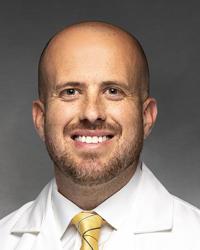
Glenn T Werneburg, MD, PhD
Urogynecology
Highlights
Age Groups Seen
- Adult 21-65
- Older Adult >65
Languages
- English
Gender
MaleAbout
About
Dr. Glenn Werneburg is a urologist specializing in complex neurourological and functional urologic conditions, including pelvic organ prolapse, urinary incontinence, and disorders of bladder and pelvic floor function. He treats male and female patients with neurogenic bladder from conditions such as spinal cord injury, multiple sclerosis, and Parkinson's disease, as well as patients requiring pelvic reconstruction, including female urinary fistula, urethral diverticula, and urethral stricture. He also sees patients with recurrent and complex urinary tract infections.
Dr. Werneburg completed his MD and PhD in Molecular Genetics and Microbiology at Stony Brook University, his urology residency at Cleveland Clinic, and fellowship in Neuro-Urology and Pelvic Reconstruction at the University of Michigan. He is Assistant Professor of Urology and Microbiology & Immunology at Stony Brook University, where his research laboratory focuses on the underlying mechanisms of urologic disease to improve diagnosis and treatment for his patients.
Academic Title
Assistant Professor, Department of Urology
Publications
- Miller, A. W., Jeong, S. H., McSweeney, S., Vasavada, S. P., & Werneburg, G. T. (2026). Urinary Peptide Signatures Distinguish Overactive Bladder and are Associated with Improvement in Incontinence Following Therapy. Urology.
- Werneburg, G. T., Gross, M. D., Hettel, D. R., Lyon, M., Jeong, S. H., McSweeney, S., ... & Miller, A. W. (2026). Urinary Microbiome and Metabolome Differentiate Overactive Bladder From the Physiological State, and Reflect Recent Antibiotic Use and Treatment Response. The Journal of Urology, 216(1), 78-88.
- Harding, C., Da Silva, A., Khasriya, R., Khullar, V., Lombardo, R., Malde, S., ... & Werneburg, G. (2026). Is There Adequate Evidence for Intracellular Bacteria Being a Significant Cause of rUTIs and Thereby Justifying Targeted Treatments Such as Bladder Fulguration or Intravesical Therapies? ICI‐RS 2025. Neurourology and Urodynamics, 45(5), 914-921.
- Cameron, A. P., & Werneburg, G. T. (2025). Foley catheter management: a review. JAMA surgery, 160(6), 701-707.
- Jeong, S. H., Vasavada, S. P., Lashner, B., & Werneburg, G. T. (2025). Fecal microbiota transplant is associated with resolution of recurrent urinary tract infection. Urology.
Locations
- Women's Pelvic Health and Continence Center
- 140 North Belle Mead Road, Suite D, East Setauket, NY 11733
- Get Directions
- Phone: 631-638-2200
- Fax: 631-444-7620
- Stony Brook Urology
- 500 Commack Road, Suite 201, Commack, NY 11725
- Get Directions
- Phone: 631-444-6270
- Fax: 631-444-7620
- Stony Brook Urology
- 74 Commerce Drive, Suite 1, Riverhead, NY 11901
- Get Directions
- Phone: 631-444-6270
- Fax: 631-444-7620
Expertise
Education
- Fellowship: University of Michigan Medical School (center), Urogynecology & Reconstructive Pelvic Surgery, 2026
- Residency: Cleveland Clinic, Urology, 2024
- Medical School: Renaissance School of Medicine at Stony Brook University, 2018
Board Certifications
- Urology: American Board of Urology
Insurance
- (Anthem) EMP HEALTH CHOICE HMO
- (Anthem) EMP HEALTH CHOICE SR
- AETNA
- Beech Street/Multiplan/PHCS
- Health Smart WTC
- Humana Military
- MAGNACARE
- Sedgwick
- US Family Health Plan
